The Story of Click
From CAD to Silicon
The Complete Open-Source Journey of Click
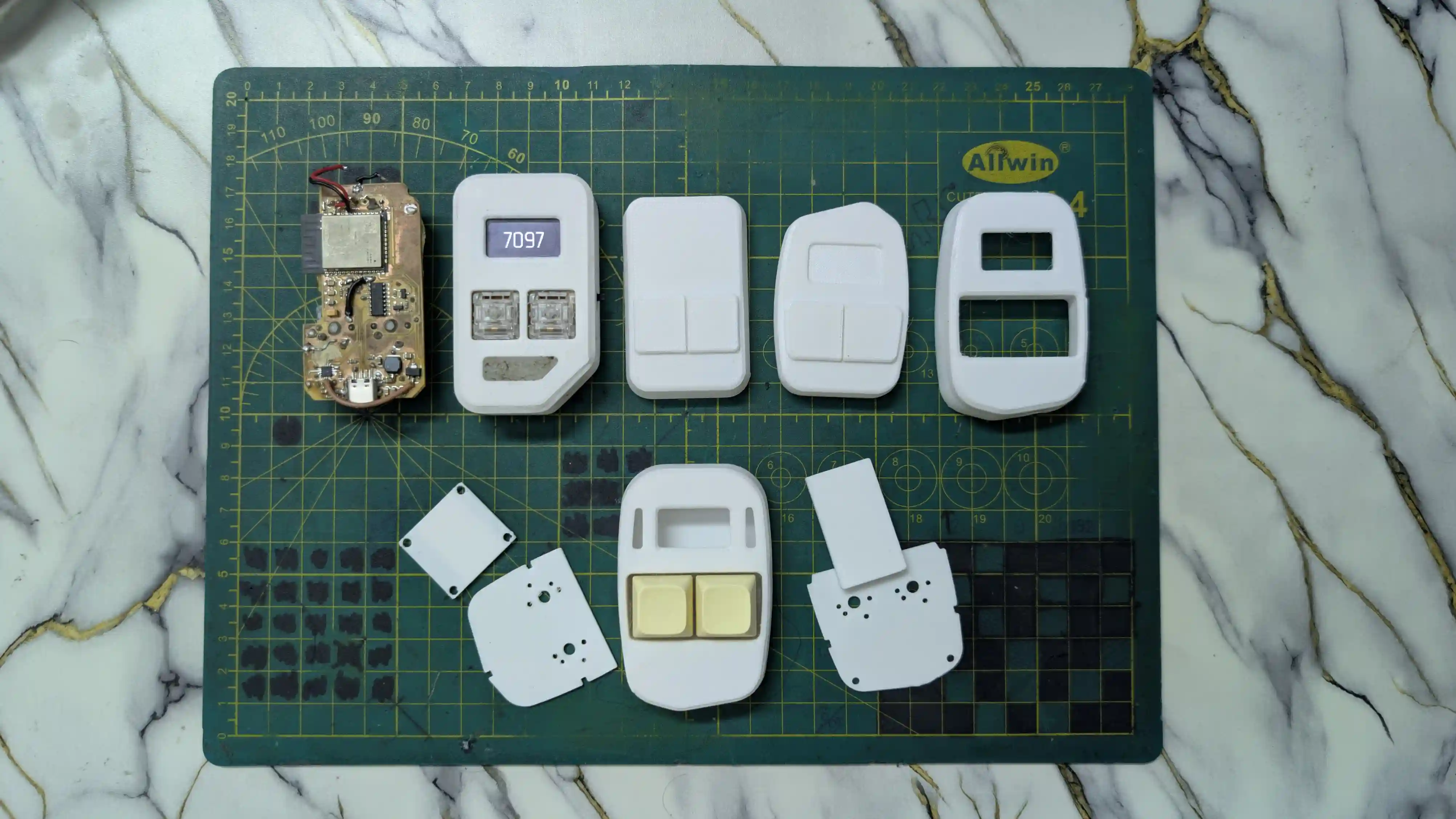
Click was born out of a quiet personal struggle: ADHD.
As a mechanical product designer, my daily life revolves around CAD geometry, injection mold tolerances, and tactile buttons. But inside my head, the world was rarely quiet. Restless energy constantly sought an outlet: tapping pens until they snapped, clicking retractable ballpoints, or mindlessly reaching for a smartphone every two minutes.
Smartphones are toxic anchors for a hyperactive brain — pumping notification badges and algorithmic feeds instead of calm. And traditional mindfulness apps felt like forced chores that my mind immediately rejected within ten seconds.
I did not want another app. I wanted a physical toy. A pocket-sized, open-source companion that gives your hands something real to hold, subtly guiding your nervous system into grounded focus without feeling like a clinical exercise.
Masking Focus in Tactile Play
To make mindfulness stick for an ADHD mind, it had to be disguised inside play:
The Myth of Sisyphus — In the flagship applet, Sisyphus stands beside a boulder on a 128×64 OLED screen. Every mechanical click of the tactile button pushes him one step up the mountain. Stop clicking, and gravity rolls the boulder backwards. There are no timers, scores, or loss conditions. Mindless fidgeting is transformed into a purposeful physical rhythm.
Just Ten — Disguises deep breathing inside a 10.0000-second precision stopwatch game. A gentle expanding and contracting circle on screen guides your inhale and exhale cadence, shifting your nervous system from fight-or-flight into rest-and-digest without feeling performative.
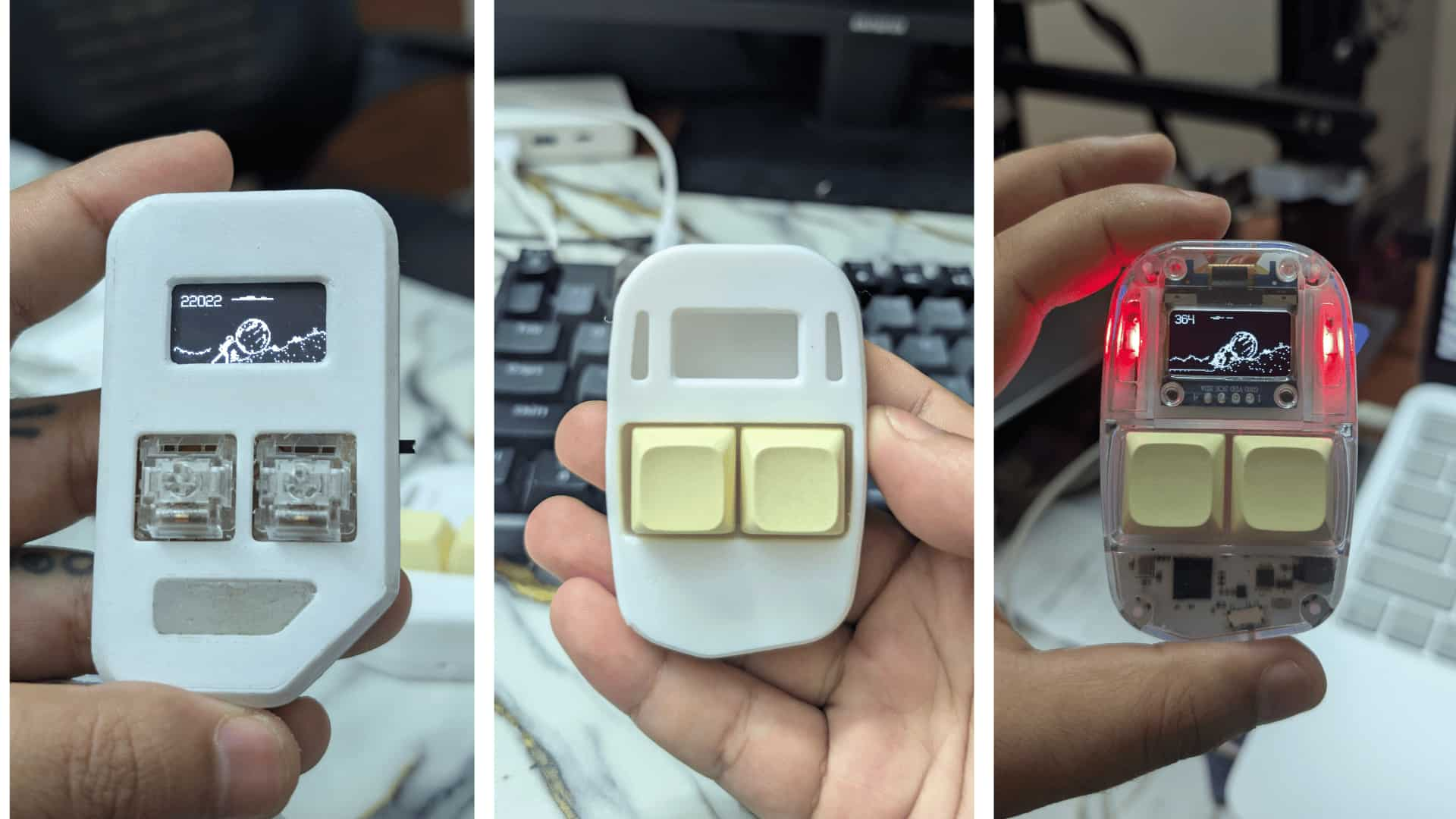
From a Fried Circuit Board to Silicon
Turning this idea into physical hardware meant stepping completely outside my mechanical comfort zone:
- V1 (The Artwork Mistake): I treated my first PCB layout like decorative SolidWorks artwork. Symmetrical curved traces and misplaced capacitors caused a direct short — frying the board with a wisp of smoke in two seconds. Electricity obeys physics, not aesthetic geometry.
- V2 (AI-Powered Firmware): With zero embedded C++ background, I leveraged prompt-based AI as a virtual lead firmware architect, iteratively building modular non-blocking state machines and NVS storage. That battle-scarred prototype proved the concept worked.
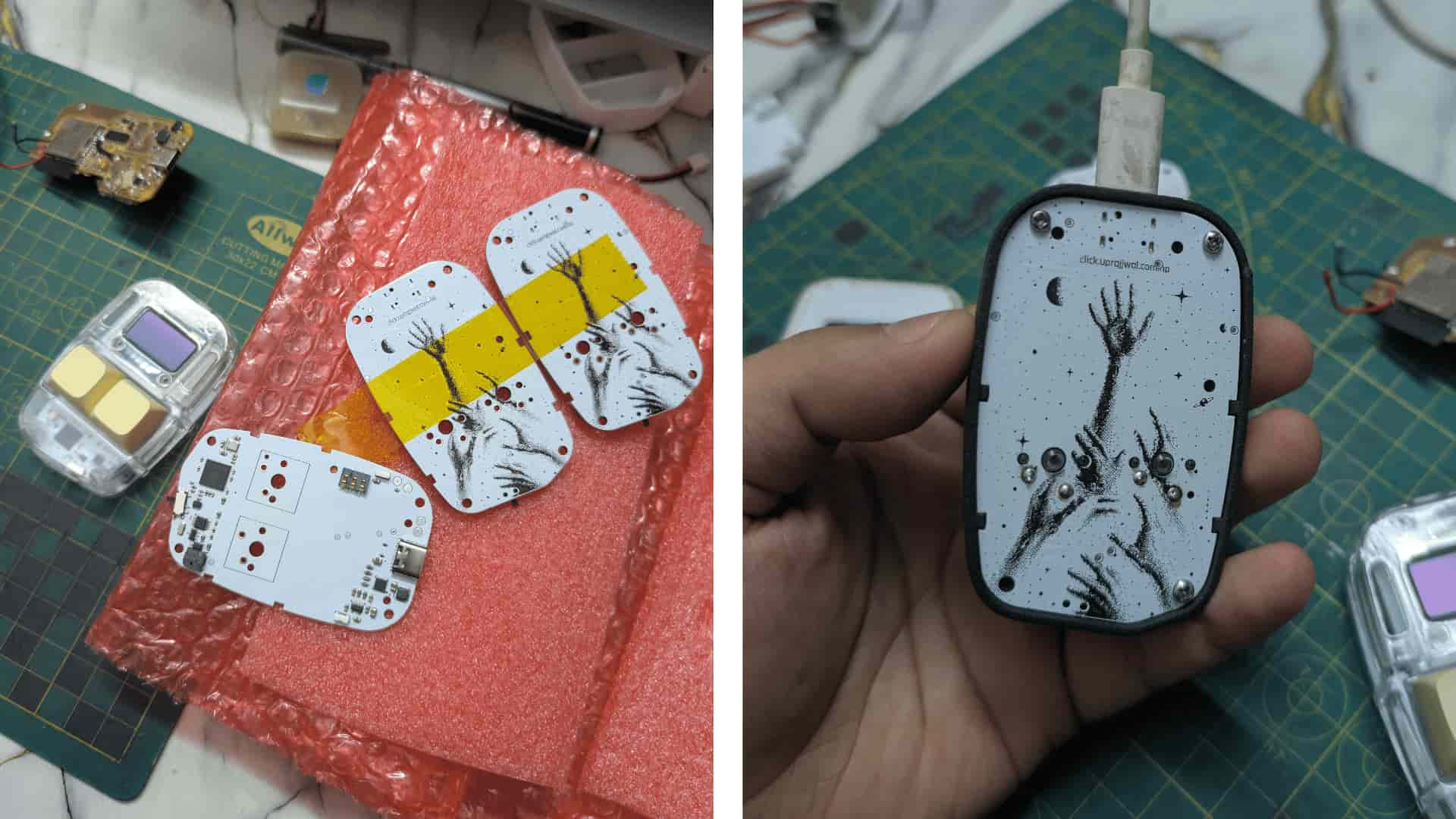
- V3 (Scrapped for DFM): A modular split-PCB design achieved an ultra-thin profile, but was scrapped because delicate ribbon connectors failed drop tests and assembly reliability. True elegance is minimalism on a single bulletproof board.
- V4 (RP2354A Silicon): Consolidated onto cutting-edge Raspberry Pi RP2354A silicon with 2MB of internal stacked flash, native USB 2.0, an SPDT kill switch for true 0µA standby leakage, and high-precision battery monitoring.
5 Million Views & 100% Open Source
When I posted short workbench clips of Sisyphus pushing his boulder on social media, the videos exploded overnight — crossing 5 million views and 200,000+ likes. Messages poured in from students, developers, and ADHDers worldwide.
Instead of filing patents or locking down a closed commercial startup, I made Click 100% Open Source.
All KiCad schematics, PCB Gerbers, SolidWorks CAD models, C++ firmware, and asset pipelines are freely available on GitHub for anyone to build, 3D print, and customize.
Assembled PCBs & Ready-to-Use Devices
If you don't have the tools to solder surface-mount components or 3D-print enclosures, I am also planning to sell assembled PCBs as well as fully assembled, plug-and-play Click devices.
“One must imagine Sisyphus happy.”
Hardware engineering means pushing a heavy boulder up a hill every single day. But holding a physical companion in your palm that brings calm and focus to thousands of people makes every push worth it.